ACE COMBAT 8 PSM Guide: Controls, Aircraft & Fixes
Learn ACE COMBAT 8 PSM input order, speed units, Cobra and Kulbit aircraft reports, recovery steps, and fixes for high-G turns or stalls instead of a maneuver.
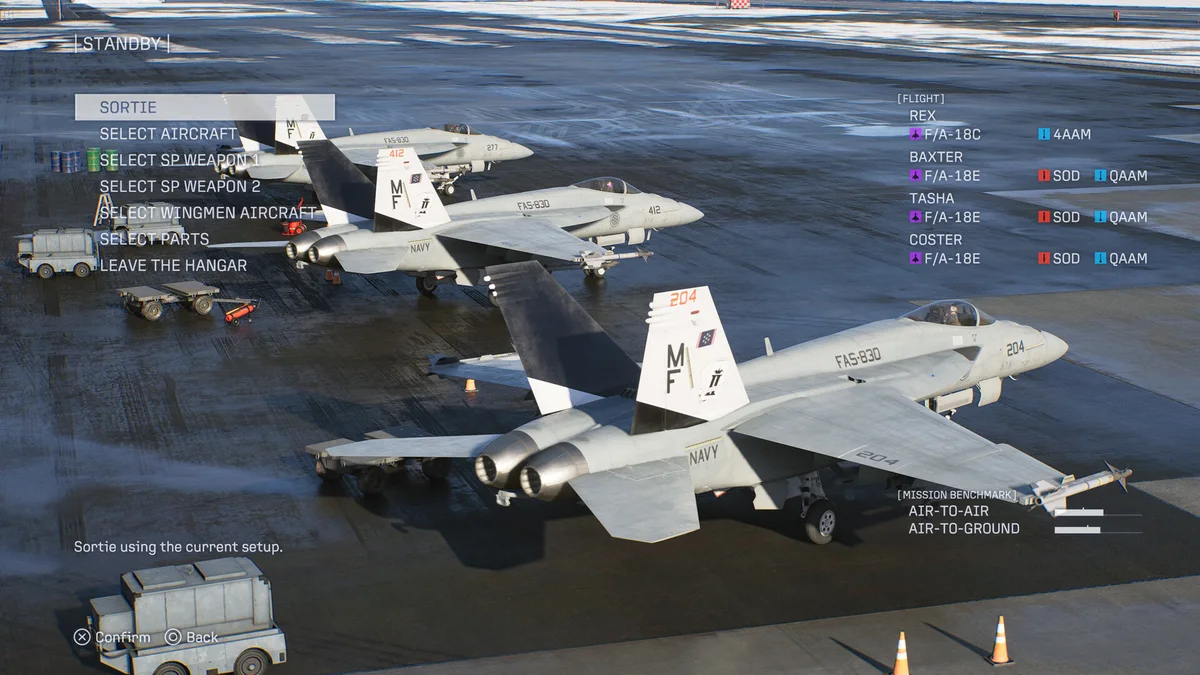
To try a post-stall maneuver (PSM), use a compatible aircraft, slow below about 500 km/h, briefly combine acceleration and braking with the stick neutral, then pitch up. Release braking and keep acceleration for recovery. These are community-reported AC8 inputs; check your own control bindings.
Reviewed October 18, 2026. The sources are AC8 player reports, not an official input specification or our own gameplay test. Start with a simple Cobra in open air. The aircraft table includes late-game equipment spoilers.
Jump to input steps, aircraft, Cobra versus Kulbit, failure fixes, or missile guidance.
PSM input sequence
The AC8 input discussion repeatedly identifies the order as the important distinction: engage the acceleration/braking inputs before pulling up. Our practice sequence is:
- Select a reported compatible aircraft. Check the exact variant in the table below. For the first attempt, leave enough altitude and clear space to recover.
- Check the HUD unit and slow down. The community reference is below roughly 500 km/h, which converts to about 270 knots, not 500 knots. As a conservative practice target, try below 250 knots (about 463 km/h) when using a knot display; that is not a separately measured activation threshold.
- Center pitch and roll. Release the previous turn so you are not already pulling when the next input starts.
- Briefly apply acceleration and deceleration together, then pitch up. Players report a distinct sound or camera change when the mode engages. If you only make a normal turn, reset and separate the input stages again.
- Release deceleration and retain acceleration. Stop pulling before you run out of recovery space. Level out and regain speed before another attempt.
The brake-release advice is also described in the Su-57 practice thread. Reports differ on exactly how long to hold each input; do not treat “half a second” as a frame-accurate rule for every controller.
| Input device | How to map the sequence |
|---|---|
| Xbox controller | If using RT for acceleration and LT for braking, combine RT + LT, then use your pitch-up input; release LT for recovery |
| PlayStation controller | If using R2 for acceleration and L2 for braking, apply the same command order with those bindings |
| Keyboard | Use the keys currently assigned to accelerate, decelerate and pitch up; verify that simultaneous key presses register |
| HOTAS / flight stick | Inspect your high-G and throttle/brake bindings; make sure axes return to neutral before the maneuver input |
Button labels here are conditional examples, not a claim about every preset. A reversed pitch axis changes which physical stick direction means “pitch up.” Rebinding controls is not required by this guide.
Community aircraft compatibility
The following split is reported by ThexLoneWolf's AC8 PSM post. It is not an official compatibility matrix or an independently tested exhaustive roster. An unlisted aircraft is unconfirmed here, not automatically incapable.
| Reported maneuver support | Aircraft |
|---|---|
| Cobra only | F-35C; F/A-18E; F/A-18F; MiG-29A; Su-33; Su-34; ADFX-02 Morgan–PIXY– |
| Cobra and Kulbit | F-22A; Su-35S; Su-47; Su-57; EA-36; FA-36; X-40 |
Do not infer support from a high maneuverability bar or a similar aircraft name. In particular, a report about the F/A-18E or F/A-18F is not a report about the F/A-18C. For role and equipment selection, use the aircraft guide.
Cobra, Kulbit and recovery
A Cobra pitches the nose sharply upward, then returns toward level flight. A Kulbit continues the rotation into a tight loop; the source lists fewer aircraft capable of that full maneuver. Learn the short pitch-and-recover motion before attempting a full rotation.
Our practice plan is to repeat one maneuver at a time in clear air, then check three outcomes: the mode actually engaged, you recovered speed, and you kept control of your altitude. Once those are repeatable, try orienting toward a single target. If the maneuver costs more position than it gains, use a normal turn for that engagement.
PSM is an optional tool for changing nose direction. It is not required for every mission, and the fact that a maneuver looks dramatic does not establish that it improved a timed run. Compare the actual result through the S-rank guide and time-bonus explanation.
Why you get a high-G turn or stall
This is our diagnostic checklist based on the input and compatibility reports above. Change one condition at a time.
| What happens | What to check next |
|---|---|
| Only a high-G turn | Check speed units, center the stick, and engage acceleration/braking before pitching |
| No PSM cue or change | Verify the exact aircraft variant and that both assigned inputs register |
| Nose rises, then aircraft stalls | Release braking earlier during recovery; check whether the aircraft is Cobra-only |
| Cobra works but the full loop fails | Compare the aircraft with the Kulbit group; do not force the same loop in a Cobra-only aircraft |
| Works sometimes, fails while already turning | Reset to neutral pitch and roll before the input sequence |
| Correct maneuver but collision or heavy altitude loss | Practice with more clearance and end the pitch earlier; recover before repeating |
A useful practice note contains the aircraft, mode, control preset, speed and unit, input order, whether the cue appeared, and whether recovery succeeded. “PSM failed at 300” is missing the most important context.
Does PSM break missile guidance?
ThexLoneWolf reports guidance interruption in the campaign, but the same post adds a multiplayer caveat and commenters dispute its use against PvP missiles. Do not treat PSM as guaranteed invulnerability or a proven online missile-defense technique. Keep normal positioning and countermeasures in your defensive plan; the report does not establish protection from every weapon.
For a difficult air target, compare a cleaner firing angle and the special-weapon choices before adding a maneuver that you cannot yet recover from consistently.
Is the speed limit 500 knots?
No. The commonly reported reference is about 500 km/h, approximately 270 knots. Below 250 knots is a conservative practice suggestion from the input discussion, not the mathematical conversion of 500 km/h.
Can every high-maneuverability aircraft do a Kulbit?
No. Community reports distinguish Cobra-only aircraft from aircraft capable of a full Kulbit. Check the exact variant and reset your practice expectations accordingly.
Must I change my controller buttons to perform PSM?
No mandatory remap is established here. First inspect the current bindings, confirm both commands register, center the stick and separate the input sequence. Physical button names depend on your preset.